Acoustic Engineering · Chile & Latam
PROSAC
News
Technical and regulatory insight on environmental acoustics, regulations, underwater noise, and maritime sustainability.
 Regulations
New Noise Standard in Chile
What replaces DS 38/11 and what changes with the new DS 14/2024?
The Ministry of the Environment published D.S. N°14/2024 MMA, a standard that updates and replaces D.S. N°38/2011. This regulation outlines a gradual implementation: August 2027 for SEIA projects and August 2028 for general enforcement...
The new framework introduces significant adjustments to limit determination and noise emission measuring. The decree itself notes a complete text restructuring to improve comprehension, clearly outline regulated sources, and provide higher technical and legal certainty for compliance verification.
One of the most critical changes lies in receptor zoning. The framework maintains the limits for Zone I (55 dBA day / 45 dBA night) and Zone II (60 dBA day / 45 dBA night). However, multiple receptors will switch from Zone III (65 dBA day / 50 dBA night) to Zone IV (70 dBA day / 70 dBA night), increasing the maximum permissible thresholds.
This adjustment will heavily impact areas with industrial or productive operations. When a receptor linked to productive activities is located within a Rural Zone, the applicable thresholds will correspond to Zone IV: 70 dBA during both day and night.
In rural areas, thresholds are no longer based on a single criterion; instead, they are established according to baseline rural noise ranges, with values spanning from 40 dBA to 65 dBA by day, and 40 dBA to 50 dBA at night. The minimum duration required to determine this rural baseline noise is set at 15 minutes, up to a maximum of 30 minutes.
The SMA has pointed out that noise remains one of the primary drivers of community complaints: during the first quarter of 2026, noise complaints rose by 24% compared to the same period the previous year.
R&D
Acoustic Innovation in Sustainable Aquaculture
PROSAC drives underwater noise mitigation and animal welfare solutions
PROSAC continues to expand its R&D line through solutions focused on underwater noise mitigation, animal welfare in aquaculture, and reducing environmental impacts from maritime operations...
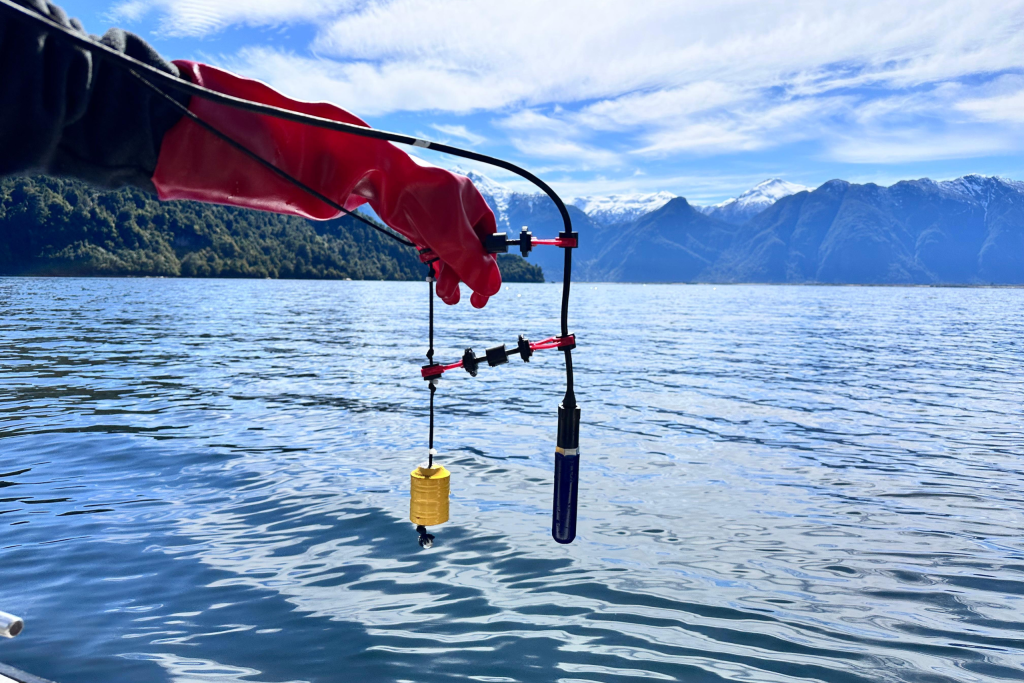
One of the main advancements involves acoustic technology applied to aquaculture, currently undergoing validation and testing phases designed to provide scientific backing for these systems and assess their performance in live production facilities. This line of innovation aims to mitigate stress in fish populations, optimize facility management, and support a more sustainable salmon farming industry.
As part of its international outreach and innovation strategy, PROSAC has established technical collaboration pathways with the Canadian research center Merinov, a leading authority on applied research for the fishing and aquaculture sectors, aiming to accelerate knowledge transfer and explore future joint technological opportunities.
Concurrently, the firm continues engineering answers to handle underwater noise caused by commercial vessels, specifically targeting cavitation phenomena. This development is designed to reduce ambient underwater acoustic pollution and limit impacts on sensitive marine wildlife and habitats.
PROSAC's R&D initiatives directly align with international benchmarks for marine sustainability, technological innovation, and ecosystem protection, particularly within the framework of policies advanced by the International Maritime Organization (IMO).
 R&D
R&D
Technology for Underwater Noise Reduction
Project co-funded by Corfo to lower acoustic impact on marine wildlife
PROSAC introduced an R&D project centered on underwater acoustic mitigation by modifying vessel propellers, achieving a notable reduction in noise output caused by cavitation...
The initiative, spearheaded by PROSAC's R&D branch since 2023 and co-funded by CORFO, intends to foster more sustainable aquaculture operations via specialized technologies built to limit environmental disruption from shipping and cultivation activities.
The deployment has benefited from technical partnerships with IA Consultores, ASMAR Magallanes, and Australis Seafoods, including laboratory trials alongside field measurements under true operational constraints within cultivation sites across the Aysén and Magallanes Regions.
Field data confirm a significant reduction in acoustic exposure areas affecting marine fauna in aquaculture corridors, delivering practical, actionable solutions to an environmental concern attracting widespread global attention.
This vector of innovation is tailored to contemporary targets in underwater sound control, maritime sustainability, and oceanic ecosystem preservation, providing next-generation technologies for Chile's aquaculture and salmon farming sectors.
 Education
Underwater Noise and Marine Acoustic Pollution
Impacts on marine wildlife and environmental challenges in Southern Chile
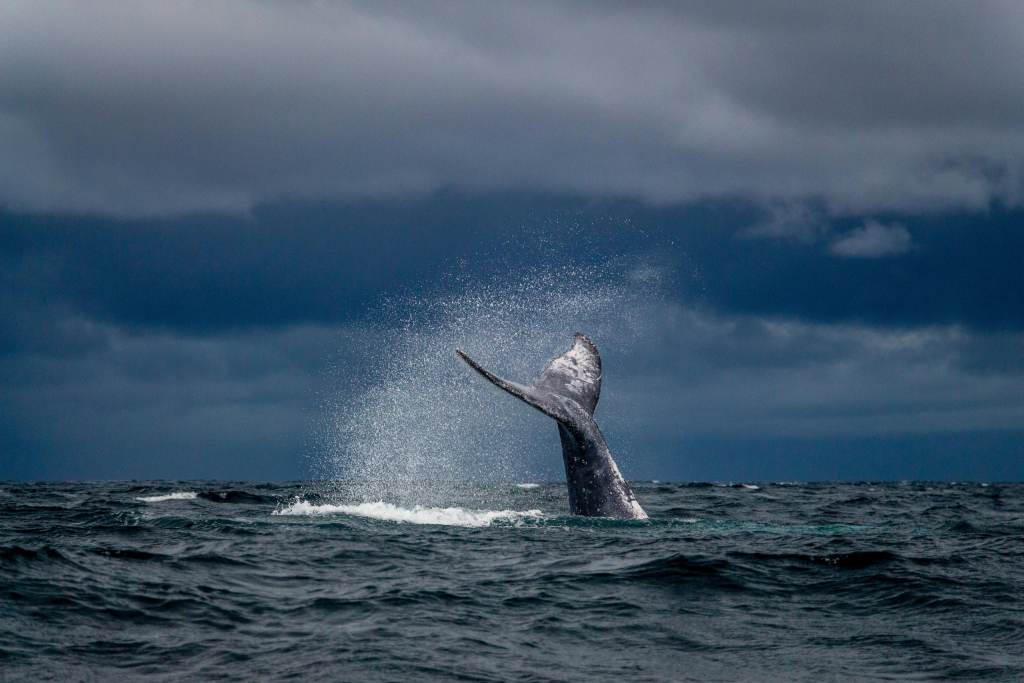
Underwater noise has surfaced as a prominent global environmental concern. In Chile, escalating maritime shipping channels and intensive aquaculture have driven up ambient underwater noise levels...
The regions of Los Lagos, Aysén, and Magallanes represent critical focus areas due to concentrated maritime operations, active aquaculture layouts, and vital logistical connections to southern shipping lanes. In these coastal settings, issues such as propeller-driven cavitation can act as dominant sources of underwater radiated noise.
Extensive international studies indicate that underwater noise pollution can heavily disrupt communication, spatial orientation, foraging habits, and behavioral patterns of marine mammals and diverse aquatic life. Over long durations, exposure to high sound pressure levels can trigger chronic stress, disorientation, and physiological injuries.
In response to this trend, implementing active acoustic mitigation and adopting sound-reducing technologies have become essential steps toward establishing maritime commercial frameworks compatible with the protection of marine ecosystems.
Currently, global environmental agencies and regional authorities continue to stiffen policy frameworks and management criteria designed to curb human-caused underwater sound footprints, particularly across highly sensitive ecological preserves.
 Regulations
Noise Pollution Regulations in Chile
Standards, thresholds, and SMA enforcement: active penalties
Out of the absolute volume of complaints handled yearly by the Superintendency of the Environment, half center on noise nuisances. The Ministry of the Environment has restructured noise management protocols, defining penalties and tracking bodies...
From 21:00 through 07:00, the maximum allowable limit drops to between 45 and 50 dB(A). Existing statutes explicitly exclude from these thresholds: aviation, maritime, rail, and standard vehicular traffic; public emergency systems and alarms; structural blasting; public space events; and standard domestic residential activity.
The Superintendency of the Environment (SMA) acts as the central administrative body responsible for inspecting and monitoring any noise emission legally deemed a nuisance. It delivers annual metrics to the Ministry of the Environment tracking code compliance, citations, and sectors generating the highest complaint counts.
Local municipal governments retain independent regulatory authority through municipal noise ordinances. Within multi-family housing complexes or condominiums, specific bylaws govern co-existence to ensure tenants do not cause disruptive noise during designated rest hours.
Formal administrative complaints must be filed within 3 months of the documented incident. Penalties defined under Article 39 of Law 20.417 span: formal written warnings, financial penalties ranging from 1 to 10,000 Annual Tax Units (UTA), temporary or permanent operational closures, and the total revocation of Environmental Qualification Resolutions (RCA).
 Events
PROSAC Participated in AQUASUR 2024
Showcasing advancements in aquaculture sustainability and underwater noise mitigation
PROSAC took part in AQUASUR 2024, presenting engineering breakthroughs and field methodologies in environmental acoustics, underwater noise management, and operational sustainability applied to aquaculture hubs...
Throughout the exhibition, the company led technical tracks reviewing the measurement, predictive modeling, and impact evaluation of both airborne and underwater sound fields in aquaculture layouts. Sessions also covered evolving compliance frameworks, engineered noise mitigation strategies, and environmental targets for safeguarding marine wildlife systems.
PROSAC highlighted core data from its current R&D track, focusing on specialized solutions engineered to lower underwater noise emissions from propeller cavitation on support vessels deployed at marine production sites.
Attending AQUASUR provided a valuable venue to trade technical perspectives and cement partnerships across aquaculture corporate channels, shipping lines, and environmental regulatory authorities—especially as acoustic footprint management takes on increased market and regulatory weight.
With this participation, PROSAC continues to solidify its role in ambient acoustics, industrial innovation, and acoustic impact assessment for the broader maritime and aquaculture infrastructure in Chile.
No articles found in this category.